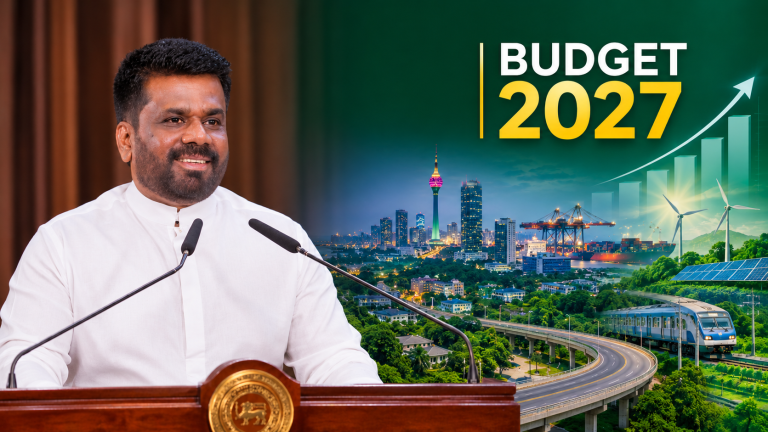
President Anura Kumara Dissanayake, as Finance Minister, presented the government’s third Budget, the 81st Budget Speech, to Parliament on November 12.
The Budget is framed around moving the economy “from stability towards transformation.”
It focuses on investment, exports, productive jobs, social welfare and sustainability.
The government says every proposal will have an accountable institution, outcome indicators and a cash flow plan.
Economic backdrop
Growth was 5% in 2025, 5.1% in Q1 2026 and 4.2% in Q2 2026.
The 2025 budget deficit was 2.3%, the lowest in 68 years.
Government revenue rose from 8.2% of GDP in 2022 to 16.6% in 2025.
Central Government debt fell from 114% of GDP in 2022 to 95% in 2025.
Interest payments took 39.6% of revenue by September 2026, down from 79.1% in 2022.
Foreign reserves are above USD 7 billion, and workers’ remittances are expected to exceed USD 9 billion this year.
Fitch upgraded Sri Lanka from CCC+ to B-, and the World Bank reclassified it as an upper middle-income country.
Inflation has risen from 2.1% in December 2025 to 8.3% in October 2026.
The current account moved from a USD 1,853 million surplus in the first nine months of 2025 to a USD 420 million deficit in the same period of 2026.
The government blamed the Middle East war and the Strait of Hormuz closure. It said more than Rs. 147 billion was spent to cushion the impact.
Cyclone Ditwah damage is estimated at about USD 3.4 billion (Rs. 1.022 trillion).
The government warned that El Niño is expected to peak in February 2027.
Fiscal path and IMF
The medium-term growth target is 7% or higher.
Core targets are a primary surplus of 2.3% of GDP and a deficit below 5%.
Revenue is to stay at 16% of GDP or more, and rise gradually to about 20% over the long term.
Primary expenditure will temporarily rise to 13.6% of GDP in 2027 because of Ditwah reconstruction, then return to 13% from 2028.
Capital expenditure of Rs. 2,000 billion is allocated, equal to 5.12% of GDP in total public investment.
The IMF programme ends in March 2027. A committee led by the Deputy Finance Minister will study whether to enter another programme.
Foreign debt service is USD 2,986 million in 2027 and USD 3,574 million in 2028.
Tax measures
The monthly tax-free threshold rises from Rs. 150,000 to Rs. 162,500.
The tax bands are widened and the rates set at 6%, 12%, 18%, 24%, 30% and 36%.
The top rate will apply from Rs. 433,000 a month, up from Rs. 358,000.
Taxpayers get extra monthly relief of Rs. 750 to Rs. 15,750.
Combined with the 2025 reforms, total relief ranges from Rs. 4,250 to Rs. 36,250 a month.
VAT is removed on exercise books, textbooks and other printed books.
The Special Commodity Levy is cut on sprats (Rs. 100 to Rs. 10 per kg), Maldive fish (Rs. 302 to Rs. 10 per kg) and dried chillies (Rs. 50 per kg). This takes effect from November 13, 2026.
CESS is cut by 25% on 800 tariff lines, and the 10% PAL on newsprint is removed from January 1, 2027.
The levy on imported sugar rises by Rs. 10 per kg to protect local producers.
The Tourism Development Levy is abolished.
BOI-approved export manufacturing and tourism firms investing at least USD 3 million can claim a 200% capital allowance.
A review of betting and gaming taxes is planned.
Bunker fuel for international shipping is exempted from the Social Security Contribution Levy.
Public sector pay and pensions
The final phase of the 2025 salary revision is implemented in 2027, with Rs. 110 billion allocated.
Executive officers’ monthly transport allowance doubles to Rs. 100,000.
Doctors’ DAT allowance rises from Rs. 70,000 to Rs. 95,000.
Nurses’ and paramedical staff’s special duty allowance doubles from Rs. 6,000 to Rs. 12,000.
The university academic allowance rises by Rs. 25,000, and external lecturer rates triple to Rs. 4,500 an hour.
Grama Niladhari travel allowance rises from Rs. 1,600 to Rs. 4,000.
Judicial, Attorney General’s Department and prison officer allowances are also raised.
Pensioners who retired between 2020 and 2024 get an interim allowance of Rs. 2,500 a month from July 1, 2027.
A pension revision under the 2025 salary structure will begin with the 2028 Budget.
Most increases take effect from July 2027, and several are split across 2027 and 2028.
Social protection
Rs. 230 billion is allocated for allowances including Aswesuma.
Allowances for kidney patients and persons with disabilities rise from Rs. 10,000 to Rs. 12,500.
Rs. 25 billion goes to the Praja Shakthi rural development programme.
A “Global Sri Lankan Heritage Citizen” programme offers free dual citizenship to the second and third generations of the diaspora.
Migrant workers get a housing loan scheme of up to Rs. 5 million with interest subsidies.
Housing aid per house under the programme rises from Rs. 1 million to Rs. 1.5 million.
Education, research and digital
Rs. 35 billion is allocated for school digitalization, teacher development and infrastructure.
Teacher trainees’ monthly allowance rises from Rs. 10,500 to Rs. 20,000 from April 2027.
Rs. 23.8 billion is allocated for research and development.
The digital economy ministry gets Rs. 18.5 billion.
A Digital Economy Bill is expected to pass in Q1 2027, and a Cyber Security Authority is planned.
Data centre investors will get electricity tariff concessions, and a legal framework for virtual asset service providers is proposed.
Business and investment
Rs. 67.7 billion is allocated for interest subsidies and refinancing for SMEs, aiming at Rs. 174 billion in concessionary loans.
Legislation in the pipeline includes the Public-Private Partnership Act, an Investment Protection Bill, a State-Owned Business Enterprises Management Bill and amendments to the Port City Commission law.
34 state enterprises have been identified for a holding company.
An expert committee is looking at solutions for SriLankan Airlines, whose accumulated losses are Rs. 528 billion.
Infrastructure
Rs. 251 billion is allocated for expressways and highways.
Rs. 53.45 billion is set aside to complete the Kadawatha–Mirigama section of the Central Expressway by September 2028.
Rs. 27 billion goes to the first phase of the Ruwanpura Expressway.
Over Rs. 1,200 billion is planned to electrify three main railway lines. Rs. 45 billion of it is for the Maradana–Homagama line in 2027.
A record Rs. 95 billion goes to railways and bus services.
Rs. 77 billion goes to drinking water.
About Rs. 100 billion is earmarked for rural roads.
Port, airport and aviation upgrades are included, such as expanding Bandaranaike International Airport’s first terminal from 6 million to 9 million passengers.
Energy
Renewables currently supply about 62% of installed capacity, and the target is 69% by 2029.
Rs. 26.5 billion goes to strengthening the national grid.
Battery storage tenders have fallen in price.
Fuel storage and pipeline projects are planned, including a Rs. 16.3 billion Kolonnawa–Port pipeline.
Health, agriculture and other sectors
Health gets Rs. 131 billion in capital expenditure.
The plan is to build 1,000 Arogya Wellness Centres in 2027–2029.
Six provincial district general hospitals are to be transferred to the central government.
Agriculture proposals include freeing underused paddy land for other crops and turning Agrarian Service Centres into “one-stop shops.”
The plantation sector gets Rs. 13 billion, with exports targeted to rise from USD 3 billion to USD 5 billion by 2030.
Fisheries get Rs. 6.2 billion, with export earnings targeted to double to USD 600 million by 2030.
Rs. 50 billion is set aside for district development programmes, at Rs. 2,000 million per district.
Rs. 10 million is allocated per MP under the Decentralized Budget Programme.
Ditwah reconstruction
Rs. 260 billion must be re-secured for 2027 from the Rs. 500 billion Supplementary Estimate, because some funds went unspent amid the Middle East war.
A new Supplementary Estimate was tabled after the speech.
Political note
In closing, the President criticised the Opposition for “superstitious beliefs” and “regressive thinking.”
The speech came a day after the Opposition launched oversight.lk to track budget implementation.
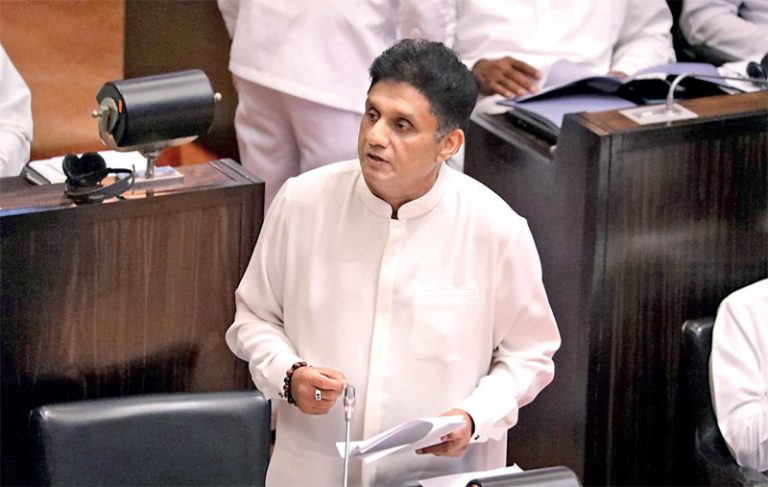
A new website, oversight.lk, was launched today (November 11) on the instructions of Opposition Leader Sajith Premadasa.
The platform monitors the government’s budget commitments, expenditure and overall performance.
It was introduced ahead of President Anura Kumara Dissanayake’s presentation of the government’s third budget to Parliament tomorrow, in his capacity as Finance Minister.
According to the Opposition, the site helps the public examine the government’s performance against commitments made in its previous two budgets, as well as proposals in the upcoming budget.
The platform provides:
Information on the implementation of previous budget proposals
Ministry-wise performance
Audit findings relating to state institutions
Analytical data on government revenue and expenditure
The initiative is intended to give the public access to information for assessing government spending, financial management and the implementation of budget commitments.
The launch comes amid Opposition calls for greater transparency over the implementation of previous budgets.
On October 22, Premadasa questioned the government in Parliament over the progress of the 2026 Budget. He requested detailed information on ministry expenditure, project implementation and unused allocations.
Deputy Finance Minister Anil Jayantha Fernando said the information would take time to compile, explaining that the government followed a performance-based budgeting approach.
President Dissanayake is scheduled to present the 2027 Budget to Parliament on November 12.
These measures enabled the Group to maintain continuity of supply and meet customer requirements across key international markets.
Amid geopolitical tensions and extreme climate-related impacts, the Group strategically increased its raw material and finished goods inventory holdings.
The increased inventory levels helped maintain production stability and customer service standards.
Trade receivables also increased in line with business growth, reflecting the higher revenue generated during the period.
Capital Expenditure and Strategic Investments
Haycarb continued investing in long-term business expansion and capacity development during the six-month period.
Total capital expenditure at Group level amounted to Rs. 4.8 billion.
Of this amount, approximately Rs. 3.0 billion was invested in Sri Lankan operations.
The investments primarily focused on:
Expanding production capacity for higher-value activated carbon products.
Strengthening manufacturing capabilities for energy storage applications.
Supporting the development of specialised activated carbon solutions.
Establishing a new greenfield manufacturing facility in the Philippines.
The investments form part of the Group’s long-term strategy to strengthen its global manufacturing presence and capture opportunities in value-added product segments.
The increase in capital employed is expected to support future earnings potential, supply chain resilience and long-term market leadership.
Management Commentary
Mohan Pandithage – Chairman of Haycarb PLC and Hayleys PLC
The Group’s financial performance reflects the successful execution of its ongoing transformation strategy.
Management remains focused on expanding its portfolio of value-added activated carbon solutions.
Key priorities include market expansion, strengthening the global manufacturing footprint and improving supply chain resilience within the ESG framework.
Rajitha Kariyawasan – Managing Director of Haycarb PLC
The Company continued advancing several strategic growth initiatives during the reporting period.
Capital expenditure of Rs. 4.8 billion reflects the Group’s commitment to long-term value creation.
Investments in Sri Lanka are primarily supporting capacity expansion in higher-value activated carbon products for energy storage applications.
The proposed greenfield manufacturing facility in the Philippines represents another important step in the Group’s international expansion strategy.
Global Manufacturing and Market Presence
Haycarb is a pioneer manufacturer of coconut shell-based activated carbon in coconut-producing countries.
The Company operates manufacturing facilities in:
Sri Lanka.
Thailand.
Indonesia.
Its international marketing network is supported by offices in:
United States.
United Kingdom.
Germany.
Australia.
The Group generates foreign exchange earnings through its value-added manufacturing operations.
Haycarb maintains a technologically advanced manufacturing position within its specialised activated carbon segment.
Its established global manufacturing network enables the Company to serve customers across multiple international markets.
Outlook
Haycarb remains optimistic about its future growth prospects, supported by increasing global demand for sustainable purification, gold recovery and energy storage solutions.
The Group expects to benefit from opportunities arising from:
Growing demand for water purification technologies.
Continued demand for gold recovery applications.
Expansion of advanced energy storage technologies.
Increasing adoption of specialised activated carbon products.
Its global manufacturing footprint and extensive sourcing network are expected to support continued business expansion.
Ongoing investments in sustainable innovation, capacity expansion and value-added manufacturing are expected to strengthen its competitive position.
The Group remains focused on delivering sustainable long-term growth while positioning itself as a leading global provider of specialised activated carbon solutions.
Key Financial Highlights
Financial Indicator
Performance
Revenue
Rs. 40.6 billion
Revenue Growth
42%
Profit Before Tax
Rs. 4.0 billion
PBT Growth
75%
Attributable Profit
Rs. 2.5 billion
Attributable Profit Growth
98%
Earnings Per Share
Rs. 8.41
Group Capital Expenditure
Rs. 4.8 billion
Capital Expenditure – Sri Lanka
Rs. 3.0 billion
Reporting Period: Six months ended 30 September 2026.
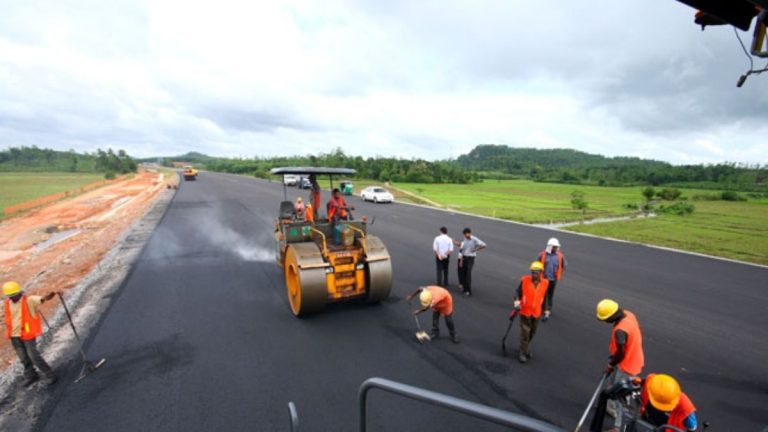
Sri Lanka’s Cabinet of Ministers has approved three road development contracts and one post-Ditwah road repair contract, worth a combined Rs. 9 billion.
The contracts were awarded to three construction companies, according to minister Nalinda Jayatissa.
WealthTrust Securities PLC, a licensed primary dealer in Sri Lanka, returned to profit in Q2 of FY2026/27
Profit after tax of Rs. 154.6 million for the quarter ended September 30
Compares with a loss of Rs. 455.2 million in the preceding quarter
Management Comment
Romesh Gomez, Managing Director/CEO, called the return to profitability “encouraging” despite continued market volatility
Focus remains on prudent risk management, a strong balance sheet and a more sustainable, consistent earnings profile
Market Backdrop
Government securities yields moved significantly during the quarter
July: upward pressure on bond yields
August: strong rally, supported by favourable liquidity, foreign investor demand, declining Treasury bill yields and limited new bond supply at auctions
Late September: momentum moderated and sentiment reversed, driven by renewed Middle East tensions, elevated global oil prices and rising global bond yields
Quarterly Performance Drivers
Net fair value gains of Rs. 170.8 million, compared to net losses of Rs. 579.3 million in the previous quarter
Net interest income of Rs. 301.8 million, a key earnings contributor
Fee-based income of Rs. 27.0 million
Brokerage income of Rs. 1.4 million
Net realised capital losses of Rs. 241.3 million continued to weigh on results
Six-Month Performance (to September 30)
Cumulative loss after tax of Rs. 300.7 million, versus a profit after tax of Rs. 437.1 million a year earlier
Net interest income broadly stable at Rs. 667.1 million (Rs. 675.8 million a year earlier)
Combined net capital and fair value losses of Rs. 787.1 million, versus net gains of Rs. 364.9 million in the corresponding 2025 period
These losses were the main drag on half-year results