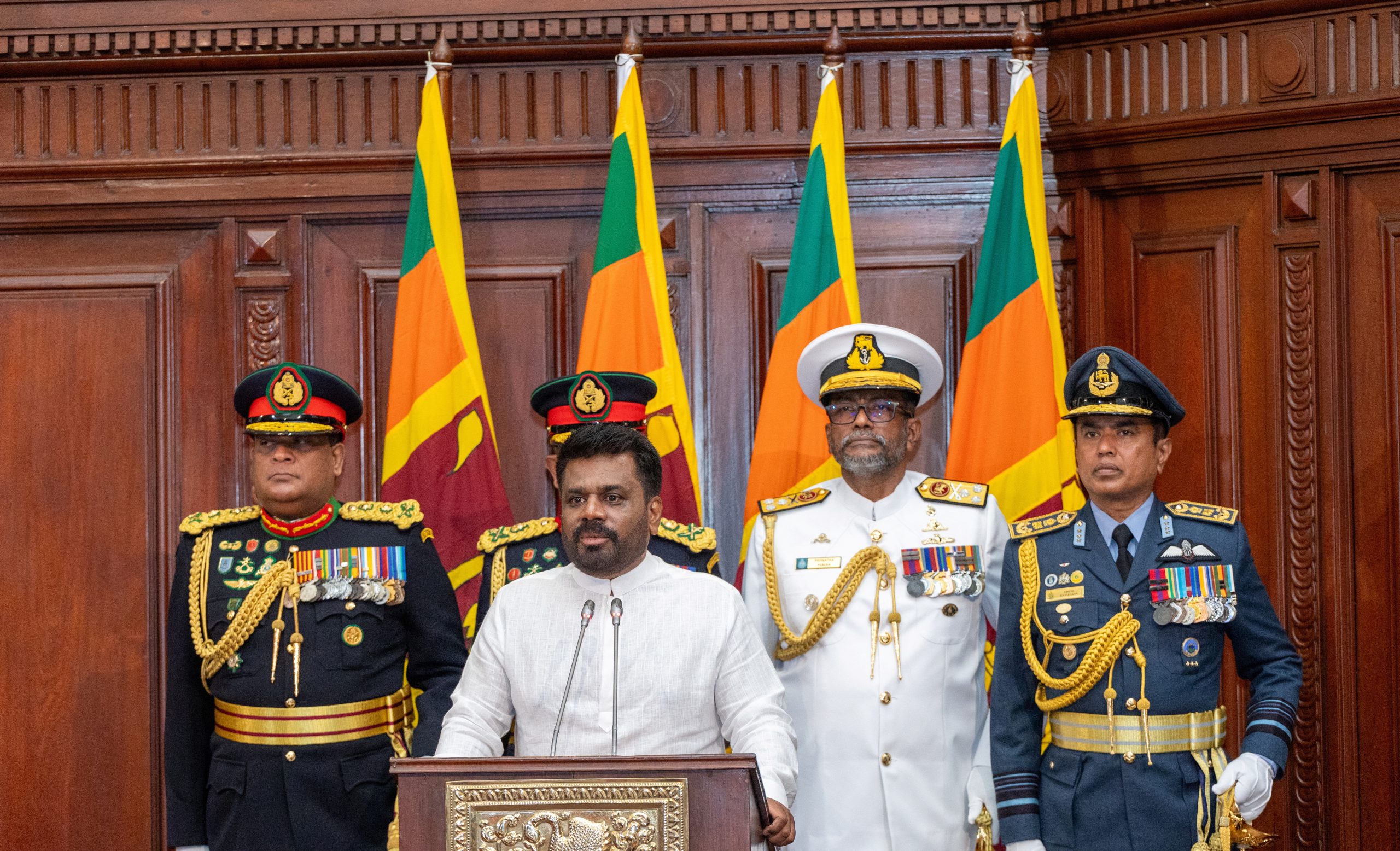
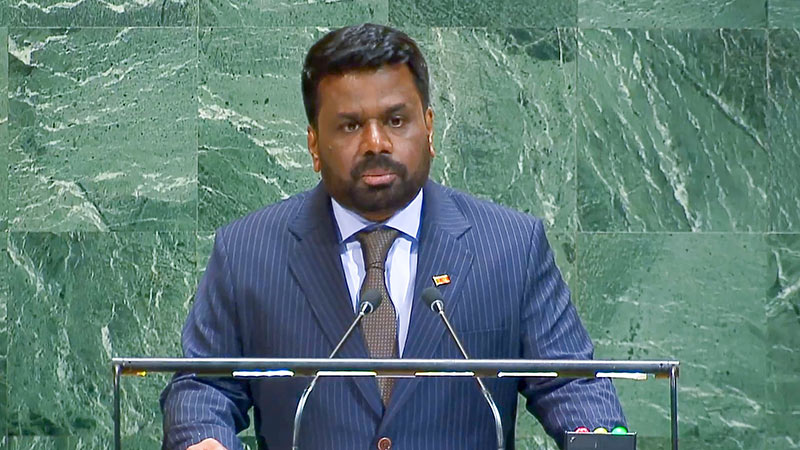

When President Anura Kumara Dissanayake addressed the 80th session of the UN General Assembly, he touched on a broad array of global and national issues. His remarks reflected his priorities and the tone he wishes to set for Sri Lanka’s role in world affairs.
Here are the major themes and notable passages from his speech:
1. Call for Immediate Ceasefire & Humanitarian Access in Gaza
One of the most emphatic parts of his speech concerned the ongoing conflict in Gaza. The President:
- Urged for an immediate ceasefire, stressing that war only produces suffering and destruction.
- Called for unhindered delivery of humanitarian aid to those affected, insisting that blockades or restrictions must be lifted.
- Demanded the release of hostages by all relevant parties, referencing international agreements and the role of the UN in facilitating such outcomes.
- Emphasized that the international community must apply strong pressure to stop killings and violence.
This was a moral and urgent appeal — positioning Sri Lanka as a voice for humanitarian concerns.
2. Poverty, Inequality and the Debt Burden of Developing Nations
Another major pillar of his address was the global challenge of poverty and the structural constraints on less-developed countries. Key points:
- He described poverty and inequality not merely as economic problems but as global catastrophes requiring collective action.
- He highlighted that many countries are overburdened by debt, which constrains their ability to invest in social services, infrastructure, or human development.
- Implicitly, he asked for international solidarity, more favorable terms for debt relief, and systemic reforms in how global finance treats developing states.
3. Combatting Drug Trafficking & Cross-Border Crime
President Dissanayake also made a pointed call on the global drug trade and associated criminal networks:
- He labelled the drug menace as a serious threat not only to health but also to governance, democracy, and social cohesion.
- He urged tighter enforcement of laws against traffickers, curtailing their ability to operate across borders.
- He emphasized the need for more rehabilitation and support for addicts, arguing that punitive measures alone are insufficient.
4. Anti-Corruption, Governance, and Ethical Leadership
A recurring theme throughout his address was the fight against corruption:
- He referred to corruption as a destructive force that erodes development, democracy, and social welfare.
- He said Sri Lanka has already begun the difficult but essential path of anti-corruption reforms at home, urging all nations to embed such values in governance.
- He framed ethical governance, transparency, and accountability as foundational to a thriving nation.
5. Vision for Sri Lanka: “A Thriving Nation – A Beautiful Life”
In concluding, President Dissanayake sought to present a coherent vision for Sri Lanka’s own path. Among his promises and aspirations:
- He spoke of poverty eradication, digitalization, environmental sustainability, and improvements in education and healthcare as pillars of national renewal.
- He pledged a government that is corruption-free and ethical, moving “step by step” toward that goal.
- He framed the Sri Lankan people as united behind the ideal of choosing “light over darkness,” suggesting a moral dimension to the national project.
Takeaways: What He Aimed to Convey
From the content of the speech, a few clear intentions emerge:
- He wants Sri Lanka to be seen as a moral voice in the global arena — taking principled stances on conflict, humanitarianism, and justice.
- He seeks solidarity and structural reform, not just charity: more equitable global systems so that developing countries are not perpetually constrained.
- Domestically, he is signaling that his presidency will prioritize good governance, anti-corruption, social uplift, sustainability, and innovation.
- He intends to link Sri Lanka’s internal agenda with its international posture: the external and internal reinforcing one another.