
Kathmandu, 9 September 2025 – Nepal plunged into political and social turmoil on Tuesday as furious protesters stormed and set fire to the federal parliament in Kathmandu. The dramatic escalation came just hours after Prime Minister K.P. Sharma Oli announced his resignation, bowing to mounting public pressure amid the country’s largest uprising in nearly two decades.
The Spark That Lit the Fire
The unrest was triggered by a controversial government decision to ban 26 popular social media platforms, including Facebook, Instagram, WhatsApp, X, and YouTube, on the grounds that they failed to register under new regulations. Only TikTok and Viber remained accessible.
What began as an outcry against censorship quickly morphed into a nationwide youth-led movement. Dubbed the “Gen Z protests,” the demonstrations united hundreds of thousands of young Nepalese who expressed frustration not only with the ban but also with systemic corruption, nepotism, and deep economic inequality.
Deadly Crackdown
On 8 September, massive crowds converged near Maitighar Mandala and the federal parliament complex in Kathmandu. Security forces responded with tear gas, water cannons, rubber bullets, and eventually live ammunition. At least 19 people were killed and hundreds more injured, drawing condemnation from international human rights groups, which decried the use of lethal force against unarmed demonstrators.
Parliament in Flames
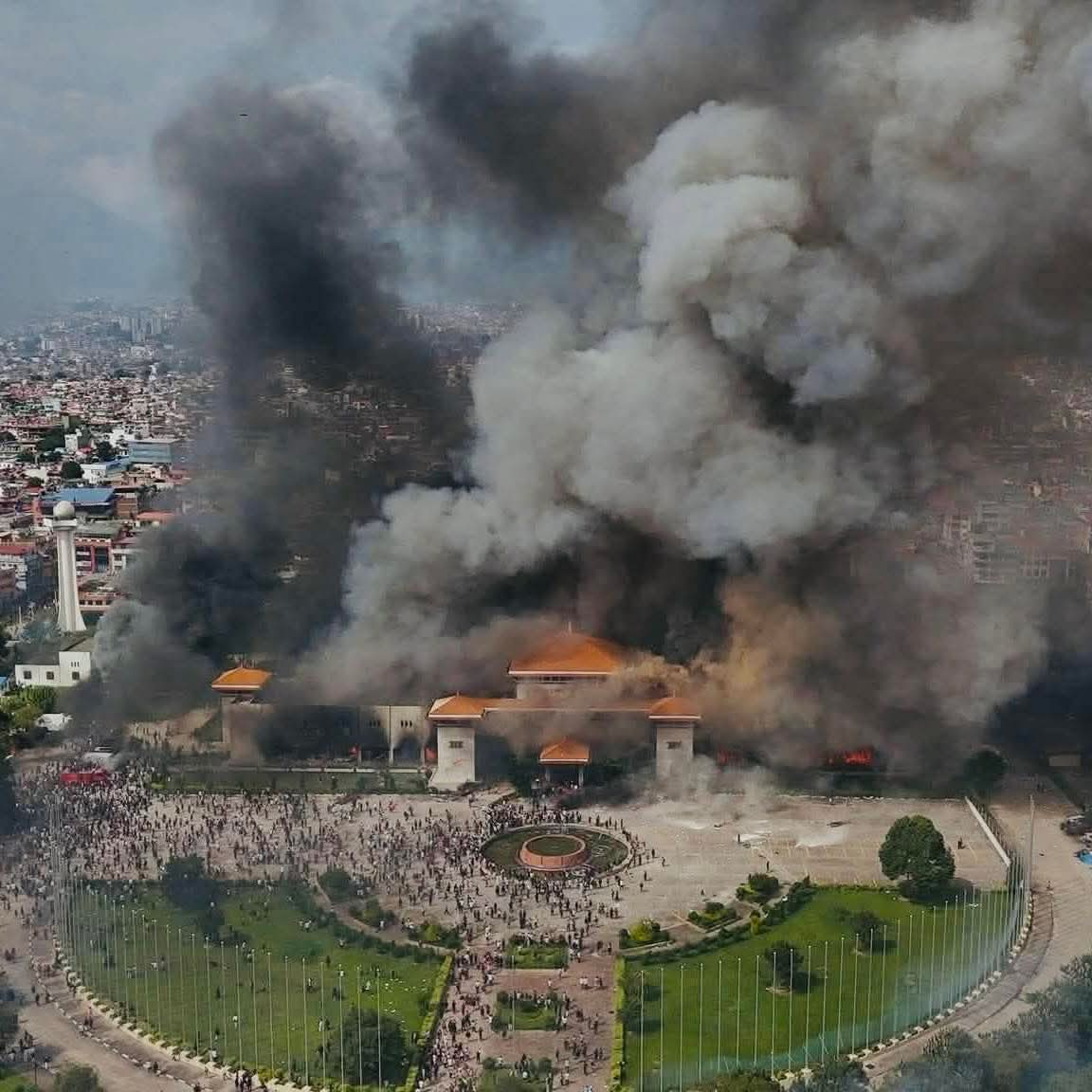
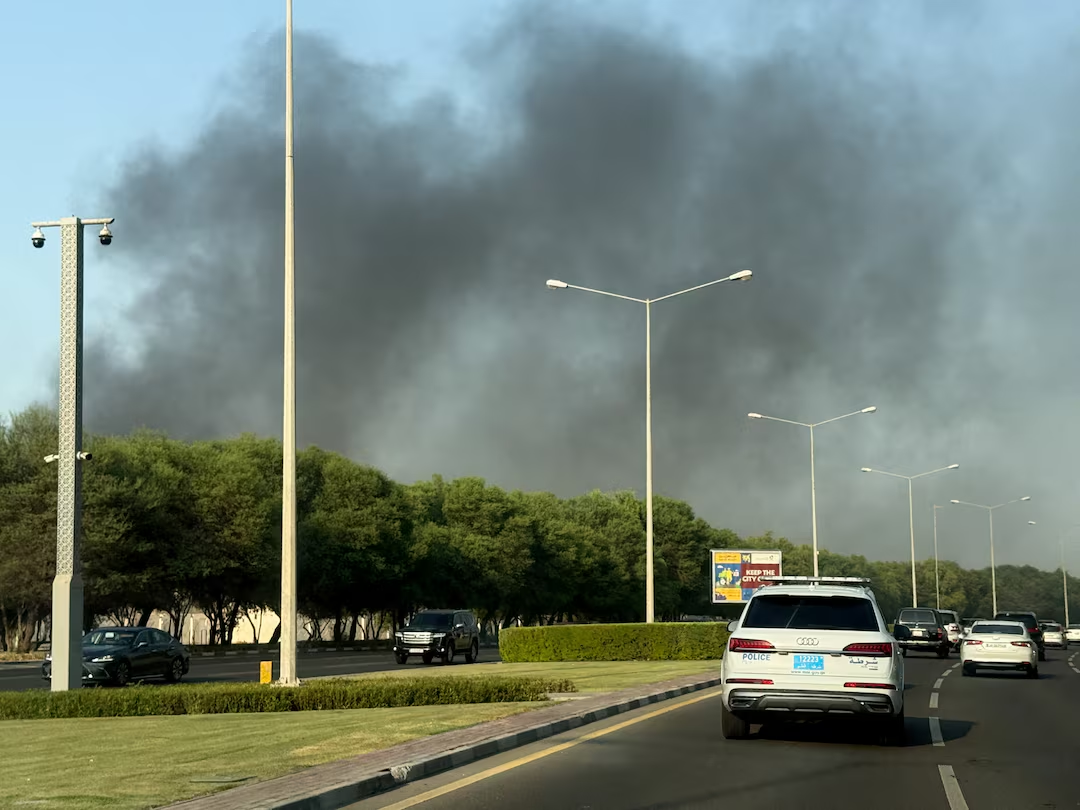
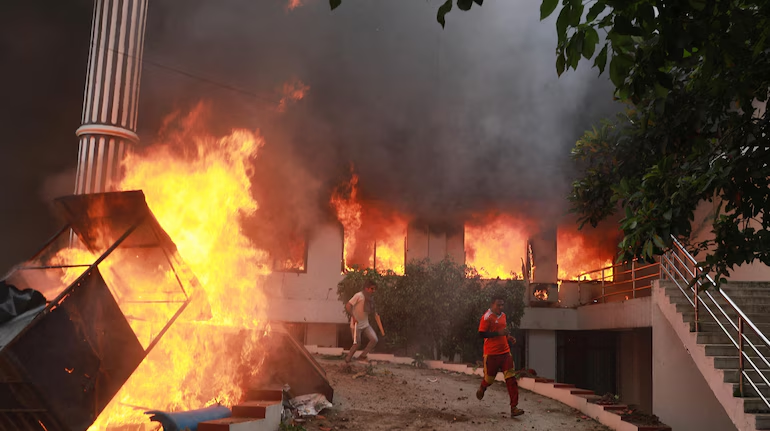
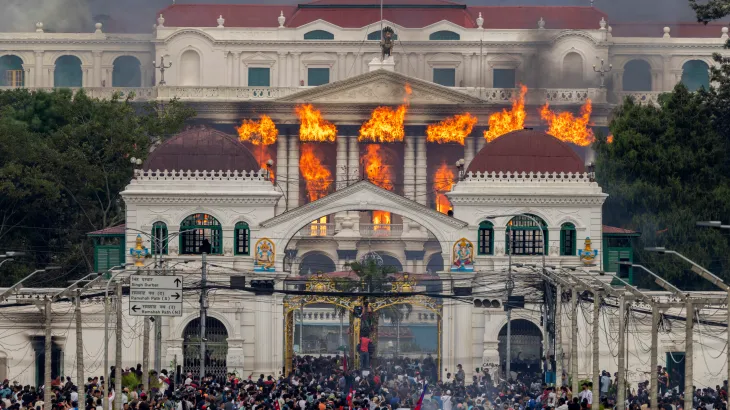
Defying a curfew, protesters on 9 September stormed government installations, including the Federal Parliament housed in the International Convention Centre. Flames engulfed parts of the modern complex, reducing large sections of it to rubble. Other government sites, including the Supreme Court and the official residences of top political figures, were also targeted in arson attacks.
As chaos spread across the capital, the airport was closed and army helicopters evacuated senior government officials to secure locations.
Political Fallout
The scale of the uprising forced a dramatic shift at the highest levels of government. Prime Minister K.P. Sharma Oli announced his resignation, stating that the country needed political resolution and stability. Earlier, Home Minister Ramesh Lekhak had resigned over the violent crackdown.
In an attempt to appease public anger, the government lifted the social media ban, promised medical support and compensation for victims, and formed a 15-day investigative committee to probe the incidents. However, these measures have done little to calm the streets, as protesters continue to demand deeper systemic reforms.
Historical Echoes
The protests are being described as Nepal’s most intense unrest since the 2006 movement that ended the monarchy. Yet unlike past uprisings, this one is overwhelmingly driven by the younger generation—tech-savvy, connected, and disillusioned with a political system they see as corrupt and unresponsive.
What Lies Ahead
Nepal now faces a critical juncture. The resignation of the Prime Minister and the lifting of the social media ban may signal short-term concessions, but the deeper issues of governance, accountability, and generational inequality remain unresolved. If the demands of the youth continue to be ignored, the unrest risks spiraling into a prolonged political crisis.